Explore our network of country and industry based websites to access localized information, product offerings, and business services across our group.
Log in to start sending quotation requests for any product.
Don't have an account? Sign Up Here
Log in now to access technical product documents from our product range.
Don't have an account? Sign Up Here
Home All Products Ammonium Hydroxide
|
IUPAC Name |
: Azanium Hydroxide |
|
Cas Number |
: 12125-02-9 |
|
HS Code |
: 2827.10.00 |
|
Formula |
: NH4Cl |
|
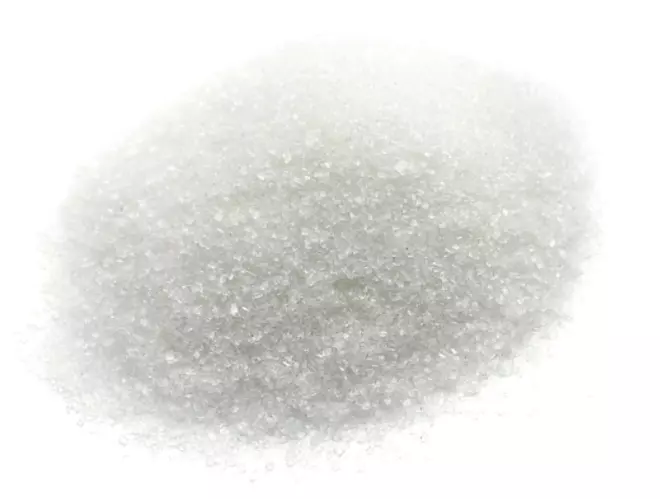
Appearance Name |
: White Crystalline Powder |
|
Common Names |
: Ammonium Hydrate, Ammonia Aqueous, Ammonia Hydrate |
|
Packaging |
: 25 Kg Net PP Woven Bag with PE Inner |
For more detailed information including pricing, customization, and shipping:
Brief Overview
Ammonium hydroxide, sometimes known as aqueous ammonia, has chemical formula NH4OH. It can also be denoted as NH3 (aq). It is soluble in water and has a pungent odor. It appears a clear, colourless liquid. Upon dissolution in water, it gives an extremely basic solution. In 1M ammonia solution, 1.42% of the ammonia is converted to ammonium, giving a high pH of 11.63.
Manufacturing Process
The manufacturing process of ammonium hydroxide involves the following steps:
1. Synthesis of ammonia
Ammonia is synthesized through the Haber-Bosch process, which involves the reaction of nitrogen and hydrogen at high temperatures and pressures over a catalyst.
2. Absorption of ammonia
The ammonia gas is then absorbed in water to form ammonium hydroxide. This can be done through a variety of methods, such as direct dissolution or absorption in a falling-film absorber.
3. Purification of ammonium hydroxide
The resulting solution is then purified to remove any impurities, such as carbon dioxide or other gases. This can be done through distillation or aeration.
4. Concentration of ammonium hydroxide
The purified solution is then concentrated to the desired strength through evaporation or reverse osmosis. The concentration can vary depending on the intended use of the ammonium hydroxide.
Food Industry
In the food production, ammonium hydroxide and other ammonia-containing substances are frequently utilized. Ammonium hydroxide is declared safe (or "generally recognized as safe" or GRAS) by Food and Drug Administration (FDA) rules for use as a leavening agent, a pH control agent, and a surface-finishing agent in food with no restrictions other than current good manufacturing practice.
Detergent Industry
Ammonium hydroxide is one of the components of cleaning agents, and is included in many window cleaning formulas.
Waste Water Treatment
Ammonium hydroxide is commonly used to produce chloramine, which is a disinfectant. Chloramine is popular due to its ability to remain active in stagnant water pipes longer, reducing the risk of waterborne infections.



 English

 العربية
 Español