Explore our network of country and industry based websites to access localized information, product offerings, and business services across our group.
Log in to start sending quotation requests for any product.
Don't have an account? Sign Up Here
Log in now to access technical product documents from our product range.
Don't have an account? Sign Up Here
Home All Products Sodium Sulfide (Red)
|
IUPAC Name |
: disodium sulfide |
|
Cas Number |
: 1333-86-4 |
|
HS Code |
: 2803.00.00 |
|
Formula |
: C |
|
Appearance Name |
: Black solid, powdered solid |
|
Common Names |
: Sodium sulfide anhydrous, sodium monosulfide |
|
Packaging |
: 25 kg / Bag |
For more detailed information including pricing, customization, and shipping:
Brief Overview
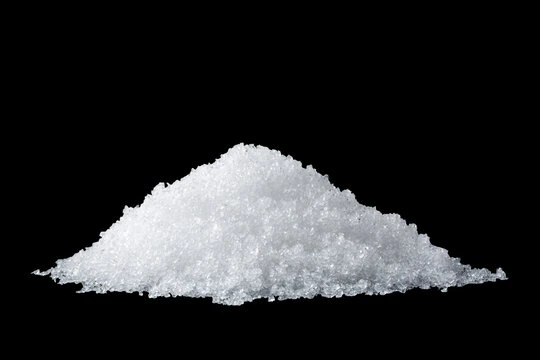
Sodium sulfide anhydrous, with the formula Na2S, primarily exists in its nonahydrated state as Na2S*9H2O. The anhydrous form appears as a white crystalline solid, while sodium sulfide flakes manifest a yellow hue primarily due to the presence of polysulfide. However, both the anhydrous and hydrated variants readily dissolve in water, producing a colorless alkaline solution.
The structure of sodium sulfide follows an anti-fluoride arrangement, where smaller sodium ions occupy the larger sulfide ion vacancies within the crystal lattice and vice versa. Upon heating, it undergoes oxidation to produce sodium carbonate and sulfur dioxide. Exposure to air causes sodium sulfide to emit a rotten egg smell due to the release of hydrogen sulfide gas. Additionally, treating sodium sulfide with sulfur leads to the formation of polysulfide.
Manufacturing Process
n laboratory settings, sodium sulfide is produced through various methods. One involves reducing sulfur using sodium in anhydrous ammonia. Another method entails sulfur reduction by sodium in a tetrahydrofuran solvent with small quantities of naphthalene catalyst. Additionally, sodium sulfide can be created through reactions between different combinations of substances like (a) caustic soda and sulfur, (b) barium sulfate and soda ash, and (c) sodium sulfite and coal.
Water Treatment Industry
Sodium sulfide finds several applications in the water treatment industry:
Heavy Metal Removal: It's used to precipitate heavy metals like lead, cadmium, and mercury from wastewater by forming insoluble metal sulfides. These sulfides can then be removed, reducing the concentration of heavy metals in water.
Dechlorination: Sodium sulfide is employed to dechlorinate water, neutralizing chlorine and removing it from industrial effluents or wastewater treatment processes. Chlorine can be harmful to aquatic life, so dechlorination is crucial before releasing water back into the environment.



 English

 العربية
 Español




















---vietnam.webp)

.webp)