Explore our network of country and industry based websites to access localized information, product offerings, and business services across our group.
Log in to start sending quotation requests for any product.
Don't have an account? Sign Up Here
Log in now to access technical product documents from our product range.
Don't have an account? Sign Up Here
Home All Products Soda Ash Dense - Kenya
|
IUPAC Name |
: Sodium Carbonate |
|
Cas Number |
: 85-44-9 |
|
HS Code |
: 2917.35.00 |
|
Formula |
: C8H4O3 |
|
Appearance Name |
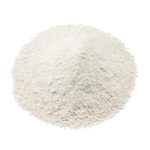
: Fine White Powder |
|
Common Names |
: Soda ash, dense, Sodium carbonate, Sodium carbonat |
|
Packaging |
: 25 KG PE bag, 1,250 KG Falcon Bag |
For more detailed information including pricing, customization, and shipping:
Brief Overview
Soda ash dense, an anhydrous form of sodium carbonate, represents the industrial term for this compound. Sodium carbonate decahydrate, a colorless, transparent crystalline substance commonly referred to as soda or washing soda, is its commercial counterpart. Produced via the ammonia soda method (Solvay process) using ammonia and carbon dioxide to process sodium chloride, soda ash also derives from the naturally occurring mineral 'Trona.' It holds immense significance across numerous industries and manufacturing procedures, serving a wide array of industrial purposes. Particularly vital in the production of flat glass, container glass, and a crucial ingredient in detergent manufacturing, it remains an integral component across various sectors.
Manufacturing Process
Mining: Sodium carbonate, found naturally as Trona (Na3HCO3CO3·2H2O), is extracted by dredging from certain alkaline lakes. Continuous replenishment of salt by hot saline springs sustains this source, ensuring full sustainability as long as dredging rates align with the replenishment rate.
Solvay Process: In 1861, Belgian chemist Ernest Solvay devised a method to convert sodium chloride into sodium carbonate using ammonia. The process involved a large tower: at its base, calcium carbonate (limestone) was heated, releasing carbon dioxide, while a concentrated solution of sodium chloride and ammonia entered from the top. Carbon dioxide bubbling through the solution led to the precipitation of sodium bicarbonate, which was then converted to sodium carbonate by heating. Ammonia was regenerated from ammonium chloride by reacting it with residual lime (calcium hydroxide) from carbon dioxide generation. This process efficiently recycled ammonia, consuming only brine and limestone, generating calcium chloride as the sole waste product. By 1900, 90% of sodium carbonate was produced through the Solvay process.
Hou's Process: Developed by Chinese chemist Hou Debang in the 1930s, Hou's process involved pumping carbon dioxide from steam reforming through a saturated solution of sodium chloride and ammonia. This produced sodium bicarbonate, collected as a low-solubility precipitate, then heated to obtain pure sodium carbonate, similar to the final step in the Solvay process. Additional sodium chloride and ammonia were introduced to the remaining solution of ammonium and sodium chlorides. The solution temperature manipulation selectively precipitated ammonium chloride in a sodium chloride solution due to temperature-dependent solubility differences and the common-ion effect.
Named "Coupled Manufacturing Alkali Method" in Chinese. Hou's process is linked with the Haber process and improves atom economy by eliminating calcium chloride production, as ammonia regeneration is unnecessary. The byproduct, ammonium chloride, can be sold as a fertilizer.
Water Treatment Industry
S
oda ash dense, known as anhydrous sodium carbonate, serves various roles in the water treatment sector:
pH Adjustment: Used to elevate the pH of acidic water, soda ash neutralizes it, reducing its corrosive impact on pipes and equipment.
Water Softening: Employed to eliminate hardness ions (calcium and magnesium) from water, reducing hardness and preventing scale buildup in pipes and appliances.
Precipitation Reactions: Assists in precipitating specific contaminants in water, facilitating their filtration and removal.
Coagulation and Flocculation: Can aid in aggregating fine particles, simplifying their removal from water through coagulation or flocculation processes.
pH Buffering: Functions as a buffer, stabilizing water pH when acidic substances are introduced



 English

 العربية
 Español




















-1768463400.webp)
---taiwan.webp)
.webp)