Explore our network of country and industry based websites to access localized information, product offerings, and business services across our group.
Log in to start sending quotation requests for any product.
Don't have an account? Sign Up Here
Log in now to access technical product documents from our product range.
Don't have an account? Sign Up Here
Home All Products Sulphuric Acid (98%)
|
IUPAC Name |
: Sulfuric Acid |
|
Cas Number |
: 68585-34-2 |
|
HS Code |
: 3402.11.00 |
|
Formula |
: CH3(CH2)10CH2(OCH2CH2)nOSO3Na |
|
Appearance Name |
: Yellowish white paste |
|
Common Names |
: Hydrogen sulfate, Vitriol brown oil, Oil of vitrio |
|
Packaging |
: 170 KG Drums, 20.06 MT |
For more detailed information including pricing, customization, and shipping:
Brief Overview
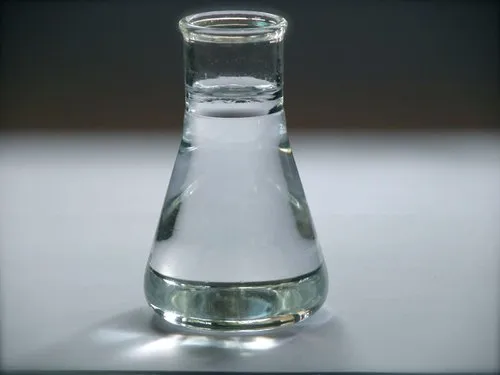
Sulphuric acid, also called Hydrogen Sulphate, is identified as a diprotic and potent acid, represented by the molecular formula H2SO4. Its physical attributes encompass a transparent to faintly yellow liquid state. Historically dubbed the oil of vitriol, sulphuric acid exhibits high solubility in water across various concentrations. Its anhydrous form doesn't exist in nature due to its hygroscopic nature, which leads it to absorb moisture from the atmosphere. Natural occurrences of sulphuric acid arise through the oxidation of sulfide minerals.
Manufacturing Process
The production of sulphuric acid through the Chamber process yields only around 65% concentration. Various methods exist for manufacturing sulphuric acid, including:
Contact Process:
This prevalent method in the industry yields highly concentrated sulphuric acid at a lower cost compared to other approaches. It involves the conversion of sulphur dioxide to sulphuric acid through the roasting of sulphide ores or burning sulphur in the presence of a vanadium (V) oxide catalyst. This is an exothermic reaction occurring in four steps:
1. Production of sulphur dioxide by burning sulphur (S(s) + O2(g) = SO2(g))
2. Oxidation of sulphur dioxide to produce sulphur trioxide (2SO2(g) + O2(g) = 2SO3(g)) using a vanadium (V) oxide catalyst
3. Absorption of sulphur trioxide into concentrated sulphuric acid (H2SO4(97-98%)) to create oleum (H2S2O7(l)) (H2SO4(l) + SO3(g) = H2S2O7(l))
4. Dilution of oleum with water to yield sulphuric acid at a specific concentration (H2S2O7(l) + H2O(l) = 2H2SO4(l))
WSA (Wet Sulphuric Acid) Process:
This method, commonly used for sulphur recovery, involves four main reactions - combustion, oxidation, hydration, and condensation. The process, facilitated by a vanadium (V) oxide catalyst, releases heat used in steam production. The steps are:
1. Combustion: H2S + ½ O2 = H2O + SO2
2. Oxidation: 2SO2(g) + O2(g) = 2SO3(g) (V2O5 Catalyst)
3. Hydration: SO3 + H2O = H2SO4(g)
4. Condensation: H2SO4(g) = H2SO4(l)
Metabisulfite Process:
This approach involves utilizing sodium or potassium metabisulfite to produce sulphuric acid. It begins by adding metabisulfide to hydrochloric acid (12.6 molars), resulting in the generation of sulphur dioxide, a simpler process than burning sulphur. Sulphur dioxide is then converted into sulphuric acid by reacting it with water containing an oxidizing agent like nitric acid or hydrogen peroxide (SO2 + H2O2 = H2SO4).
Water Treatment Industry
Sulphuric acid serves a critical role in wastewater treatment by eliminating impurities from various substances. Its uses encompass neutralizing water contaminated by basic substances and breaking emulsions. Moreover, it is integral in improving the taste and purifying drinking water. Additionally, it acts as a foundational component in producing other wastewater treatment compounds like aluminium sulphate.



 English

 العربية
 Español




















.webp)