Explore our network of country and industry based websites to access localized information, product offerings, and business services across our group.
Log in to start sending quotation requests for any product.
Don't have an account? Sign Up Here
Log in now to access technical product documents from our product range.
Don't have an account? Sign Up Here
Home All Products Dates
|
IUPAC Name |
: Phoenix dactylifera |
|
Cas Number |
: 137-08-6 |
|
HS Code |
: 293624 |
|
Formula |
: Ca[C9H16NO5]2 |
|
Appearance Name |
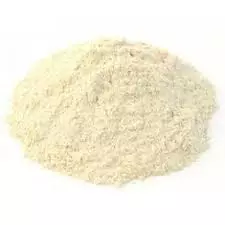
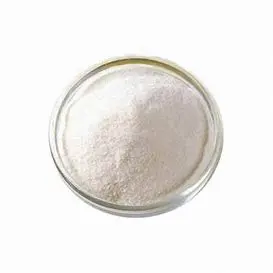
: White Powder |
|
Common Names |
: - |
|
Packaging |
: 20 kg - 25 kg cartons |
For more detailed information including pricing, customization, and shipping:
Date (Phoenix dactylifera) is a sweet edible fruit harvested from the date palm tree belongs to the family of Arecaceae. Date palm originated from Iraq, and nowadays the fruit has been a staple food and source of wealth in North Africa and the Middle East. Date has various appearances depends on the variety, however the common physical condition of date are one seeded fruit (drupe), oblong shaped, have a brown to dark brown or brown-deep red in colour. Dates have a long shelf life, with each dried date containing more than 50% of sugar by weight and 2% each of protein, fat, and mineral matter. Date fruits are usually eaten raw or used in cooking and in the production of syrup, vinegar, and liquor
Manufacturing Process
Dates have three stages of harvest time, depending on the use of the dates later on. Tamar stages is the stage of harvesting to produce dried dates products. This stage consists of: dates have amber to dark brown in colour, moisture content is below to 25% to 10% or even less, with texture are soft pliable, firm, to hard, can be kept for longer periods which make it ideal for longer storage. After harvesting, dates are sorted to remove damage and infested dates and other particles. After that, dates are fumigated and sterilized to prevent pest damage. Then, dates are washed and graded according to size, color, and moisture. Dates are then dried by using drying tunnels or solar drying to prevent the activity of molds and yeasts. Finally, dried dates are packaged in safe containers.
Grade
Dates are divided into three grades:
U.S. Grade A or U.S. Fancy
Discoloration: 5% max
Size uniformity: 90% min
Damaged dates: 10% max
U.S. Grade B or U.S. Choice
Discoloration: 10% max
Size uniformity: 85% min
Damaged dates: 15 - 20% max
U.S. Grade C or U.S. Standard
Discoloration: 20% max
Size uniformity: 80% min
Damaged dates: 20% max
Dried dates are used in human consumption usually as snack foods. Dates could also be used as cooking ingredients for sweet and savory dishes, processed into date paste, syrup or date honey, date sugar, vinegar, and liquor.
Categorization
Dates are categorized as dried fruits.



 English

 العربية
 Español




















----thailand.webp)